Audio DSP
DSP code creation in multiple platforms such as Max/Gen, Juce and Max4Live, with attention to synthesis, assisted composition and interface control.
DSP, VST3, Max/Gen, hardware boards and software instrument paths
DSP code creation in multiple platforms such as Max/Gen, Juce and Max4Live, with attention to synthesis, assisted composition and interface control.
A software instrument path that ports the original TouchDesigner prototype toward VST3 behavior, polyphonic use and a more stable production environment.
Research on hardware versions, converters, audio codec boards and hybrid paths between digital control, physical interfaces and multichannel sound.
Instrument ideas move between TouchDesigner, Max/MSP, JUCE, VST, VCV Rack and possible FPGA-oriented implementations.
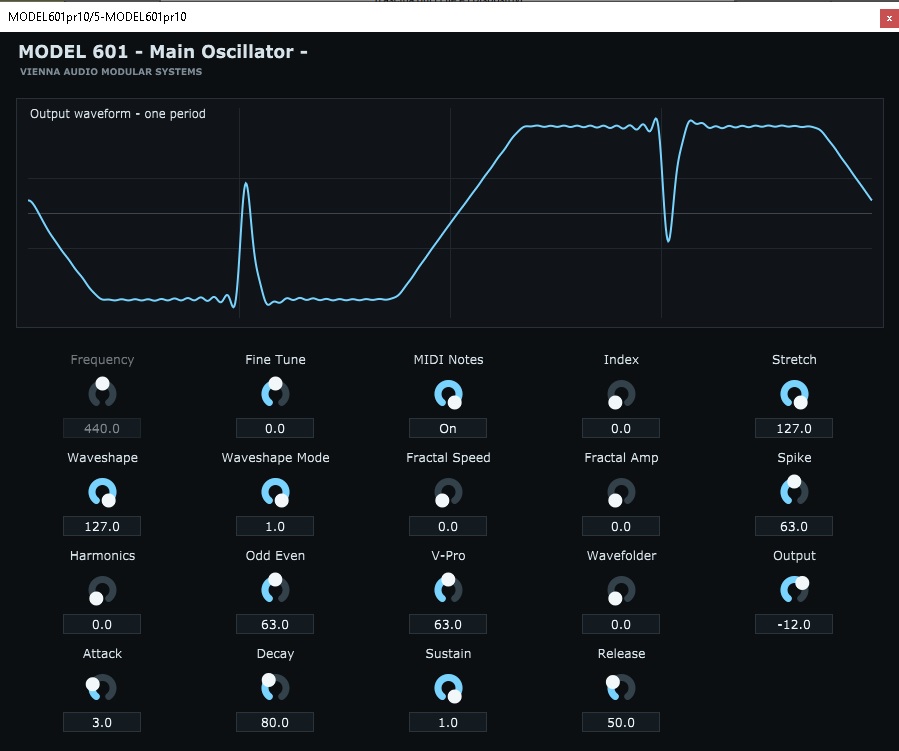
The research studies how the MODEL 601 signal flow can migrate from a visual programming environment toward FPGA, VST, VCV Rack and other instrument formats.
Waveform generation, waveshaping, modulation, fractal functions and control strategies are written as reusable code units for future musical instruments.
Software instruments become places where synthesis, performance interfaces, assisted composition and audiovisual control can be studied together.
Max and Gen sketches are used to test oscillator behavior, waveform functions, control logic and audio-rate experiments.
JUCE and VST3 development translate prototypes into instruments that can be tested inside DAWs and production workflows.
AD7616 and AD1937 board studies point toward hybrid musical instruments, multichannel audio and physical control surfaces.
A family of instruments, panels and modules that connect sound design, synthesis, interface design and audiovisual control.
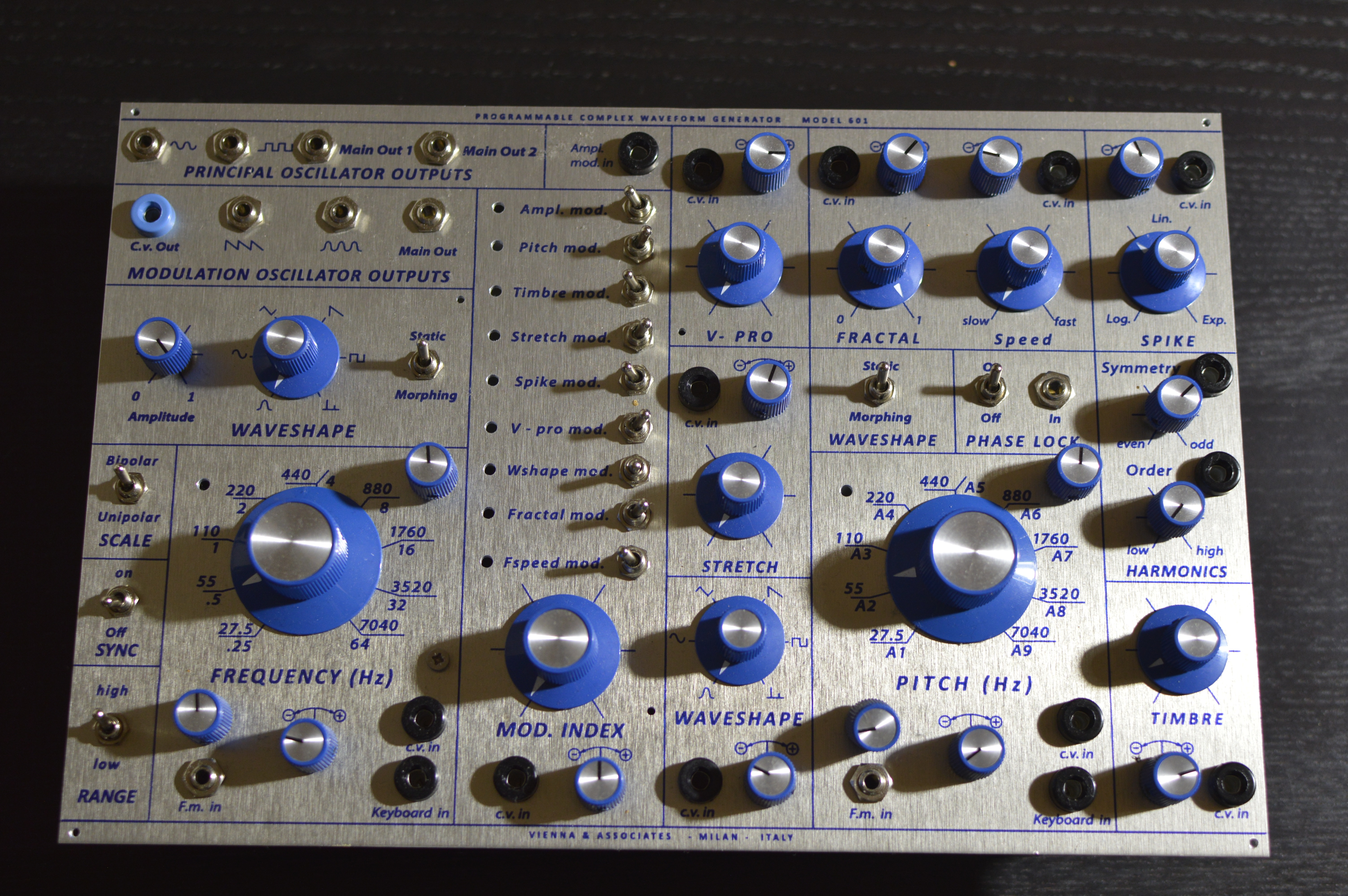
The MODEL 601 path connects a TouchDesigner prototype, software instrument development and hardware-oriented instrument research.
Converter and codec boards are documented as part of a broader practice around multichannel, controllable and modular audio systems.