Project statement
When a formula begins to behave like an organism
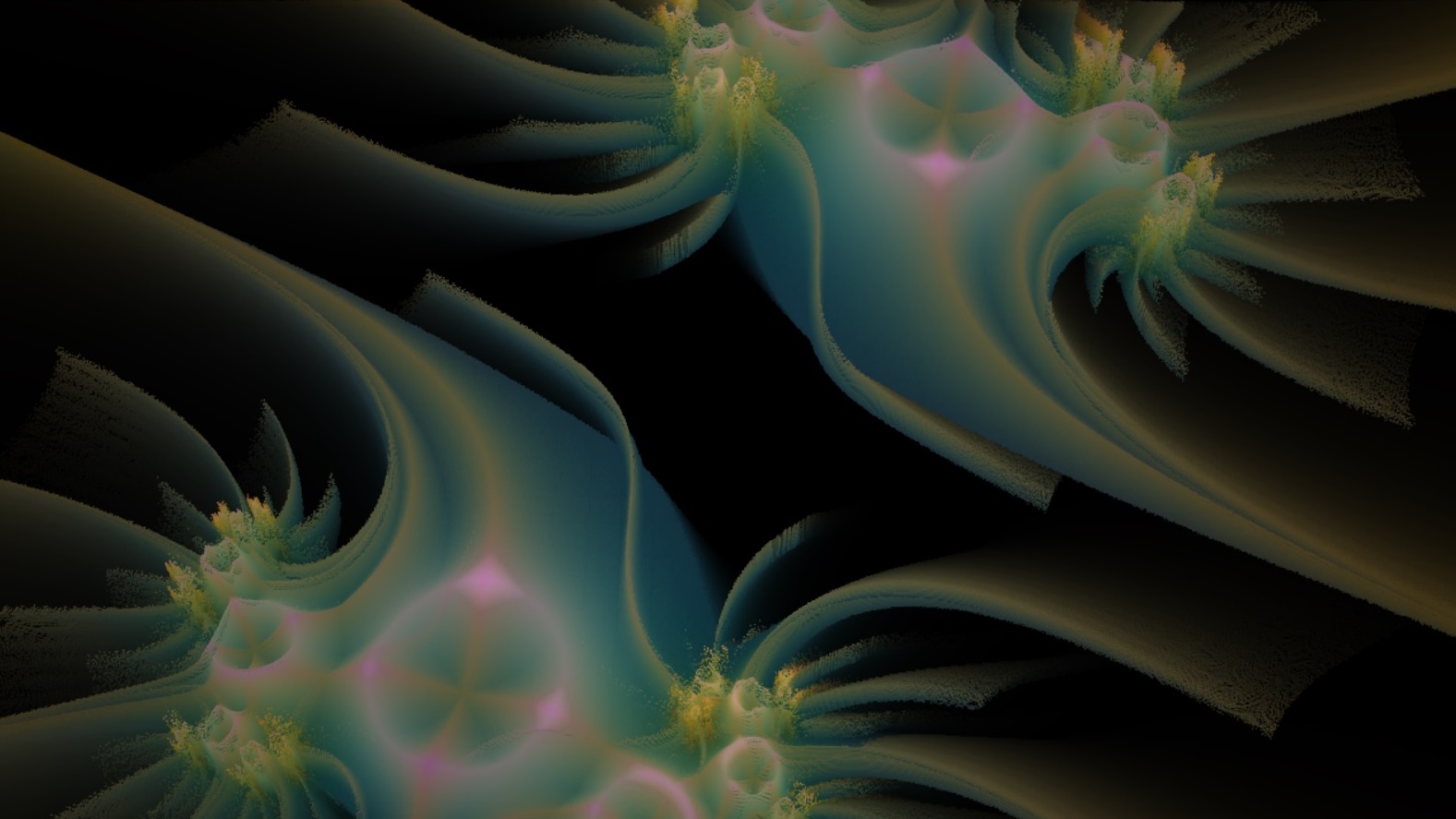
Fractal Plants began with a simple desire: to let a mathematical image stop behaving like a diagram and start behaving like a living presence.
A Mandelbrot-Julia generator produces fields whose folds, boundaries and unstable regions become the genetic material of the work. These fields are sampled and translated into a POP structure, where points acquire depth, density and direction. The result is not an imitation of botany, but a family of ambiguous creatures suspended between plant, mineral, signal and memory.
Moving study
A form that grows in time
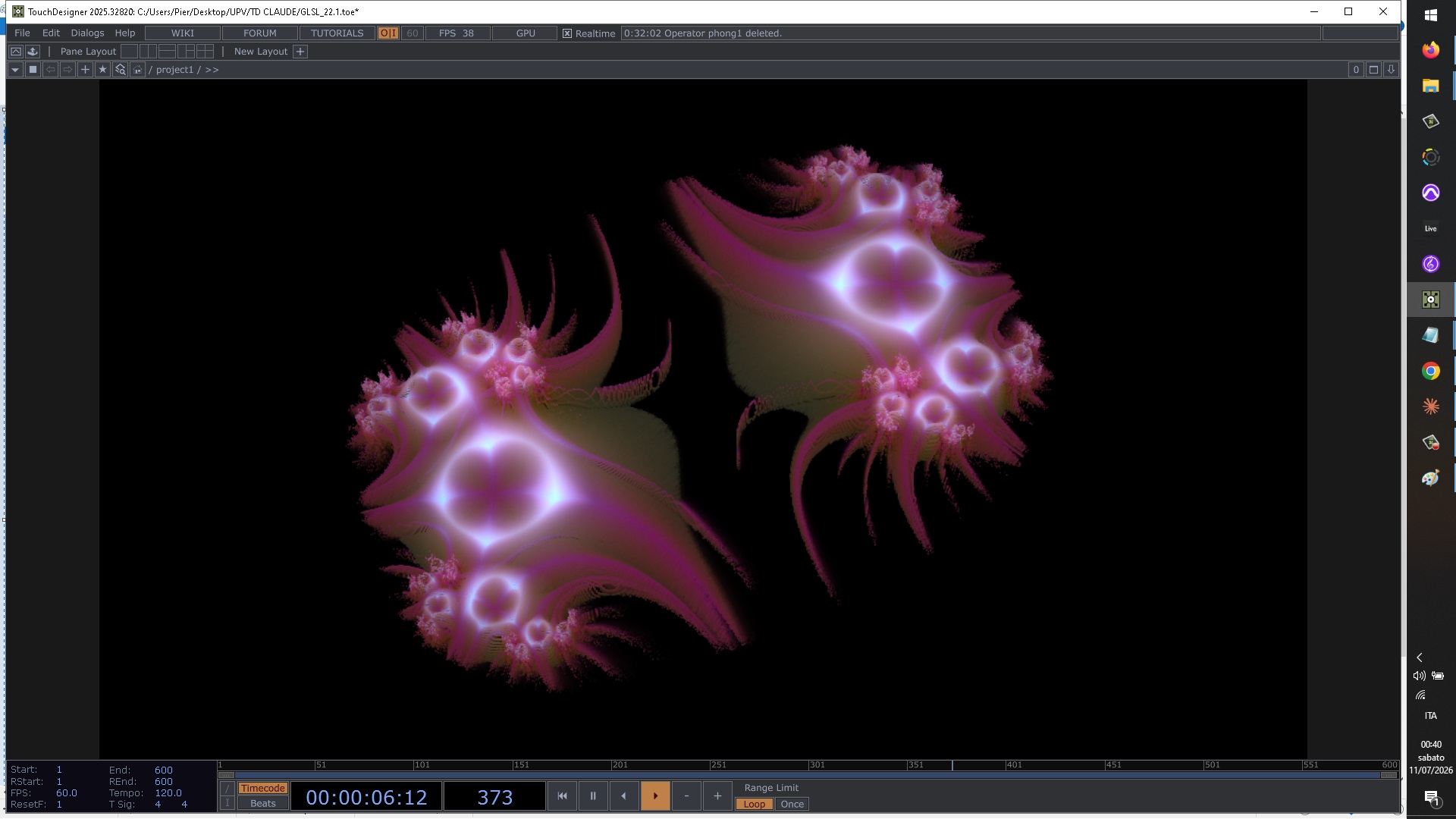
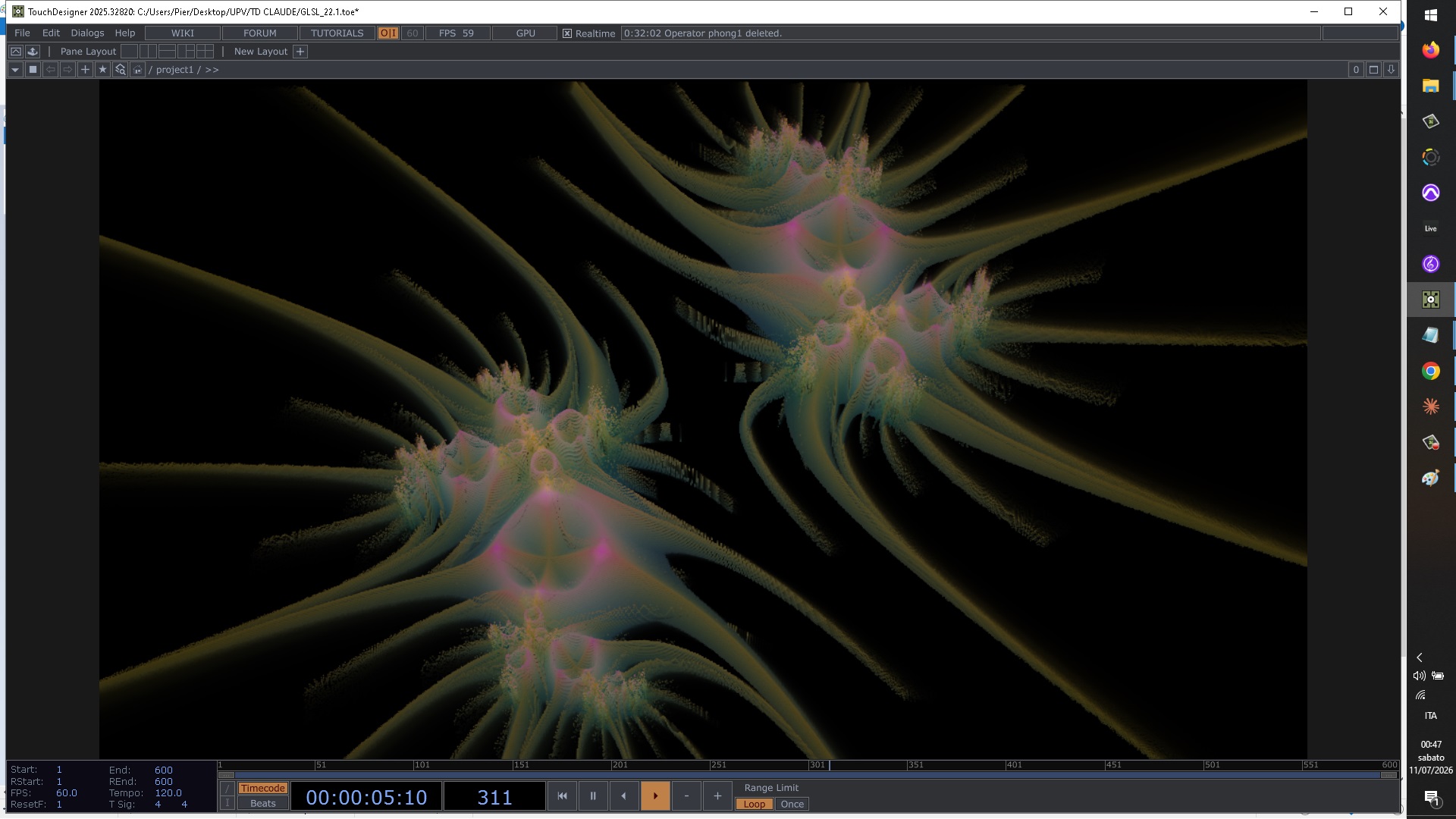
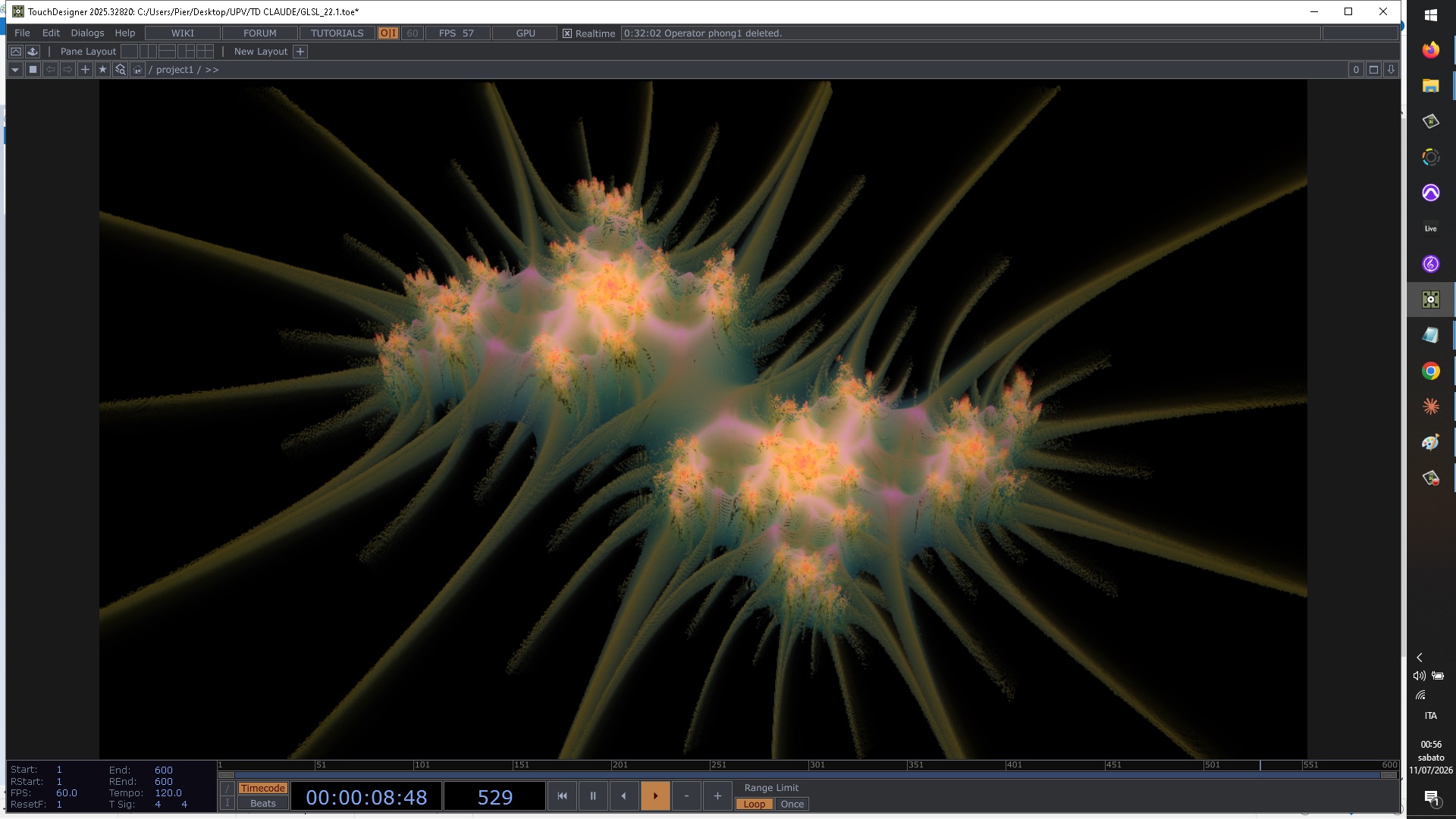
This video documents one of the three-dimensional states found during the development of the system. The image is not animated after being composed: morphology, depth and apparent growth are produced continuously inside the network.
System anatomy
From complex plane to synthetic body
The network is organised as a chain of transformations. Each stage preserves something of the original equation while gradually moving it toward volume, behaviour and temporal presence.
Mandelbrot-Julia field
An iterative fractal generator defines the initial morphology. Scale, centre, iteration and complex parameters alter the field from which every organism emerges.
Selection and sampling
Edges, densities and areas of instability are interpreted as potential sites of growth rather than as a flat image to be displayed.
POP depth
The sampled structure enters a POP subnetwork. Displacement and spatial modulation give thickness and depth to forms that originally existed only on a plane.
Temporal growth
Slowly evolving parameters make the creatures unfold, contract and reorganise. Growth is treated as a continuous negotiation between order and instability.
Interaction
Proximity and force relationships allow several organisms to influence one another, producing attraction, avoidance, clustering and changing areas of visual pressure.
Image and atmosphere
Colour, light, camera and compositing transform the point structure into a fragile visual habitat that can remain autonomous or respond to sound and external control.
The plant is not drawn. It is discovered inside a field of possible forms and allowed to remember its own transformations.
I am interested in the moment when repetition stops feeling mechanical. A fractal contains strict recurrence, yet small changes of parameter can produce radically different presences. By placing that instability in time and allowing several forms to coexist, the network becomes less like an image generator and more like a small ecology: predictable in its rules, unfamiliar in its behaviour.
- How can two-dimensional mathematics acquire a convincing sense of biological depth?
- When does procedural repetition begin to suggest individuality?
- Can interaction between generated forms produce an observable ecology?
- How can sound influence growth without reducing it to decorative audio reactivity?
- What remains of the original equation after spatial and temporal transformation?
- How can a controllable system preserve moments of genuine visual surprise?